


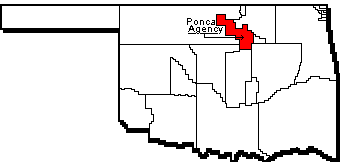
The Ponca Agency was established in 1859 for the Ponca Indians in Nebraska. When the bulk of the Ponca Indians moved to Oklahoma Territory in 1877, they were merged into a single agency called the Ponca, Pawnee, and Otoe Agency. From 1882 to 1885, the agency serving the Ponca Indians was called the Ponca, Pawnee, and Otoe Agency and from 1885 to 1901, it was called the Ponca, Pawnee, Otoe, and Oakland Agency.
Between 1901 and 1904, separate Pawnee, Otoe, and Oakland Agencies were reestablished.
In 1912, the Kaw Agency which had been established in 1904, was merged with the Ponca Agency. In 1919, the Otoe and Ponca Agencies were merged with the Pawnee Agency.
In 1921, the Ponca Agency was reestablished for the Ponca, Tonkawa, and the Otoe and Missouria< tribe. The Ponca Agency was permanently merged with the Pawnee Agency in 1927. The Ponca Agency continued to operate as a subagency under the Pawnee Agency.
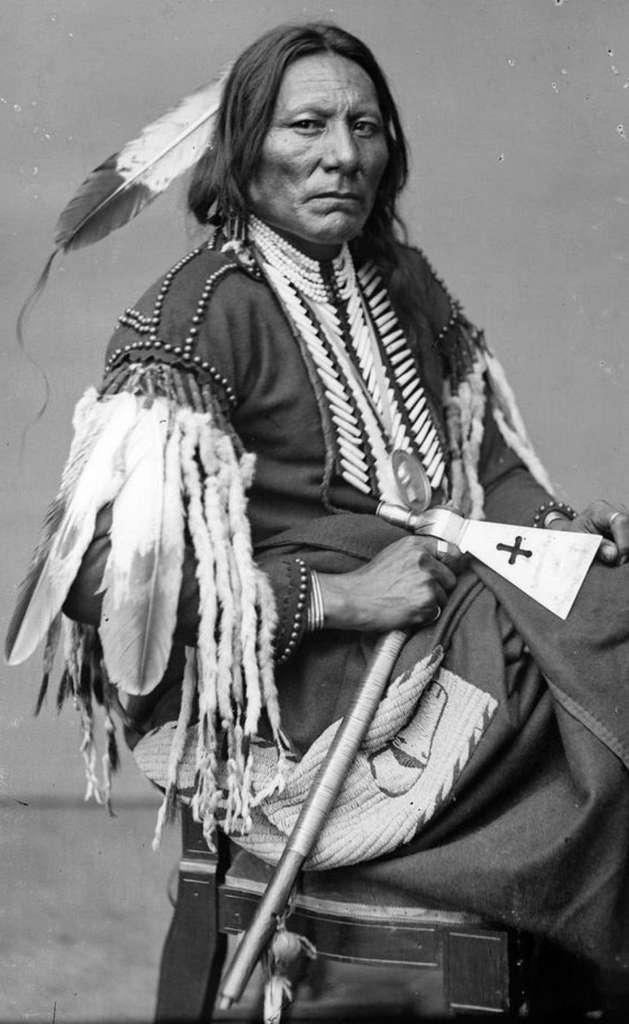
Ponca Chief White Eagle, 1877
The Ponca Agency had four reservations on the lands of the Cherokee Outlet lying west of the Arkansas River, the Pawnee, Poncas, Otoes and Missouris, and Tonkawa tribes were placed here.
The Poncas, whose old home had been in Dakota, occupied the second reservation. From Dakota they had been moved to Nebraska, and in 1877 were brought to Oklahoma and given more than a hundred thousand acres.
The Ponca Agency, which controlled many tribes, was located on the Ponca reservation. The agents complained bitterly of their troubles with these Indians. The agents tried to induce them to plant crops and raise livestock, but with little success.
Ponca City, in present day Kay County, Oklahoma, was founded on September 16, 1893, during the historic Cherokee Strip Land Run. The city is named after the Ponca Tribe, who were forcibly relocated to a reservation south of the area in 1879.
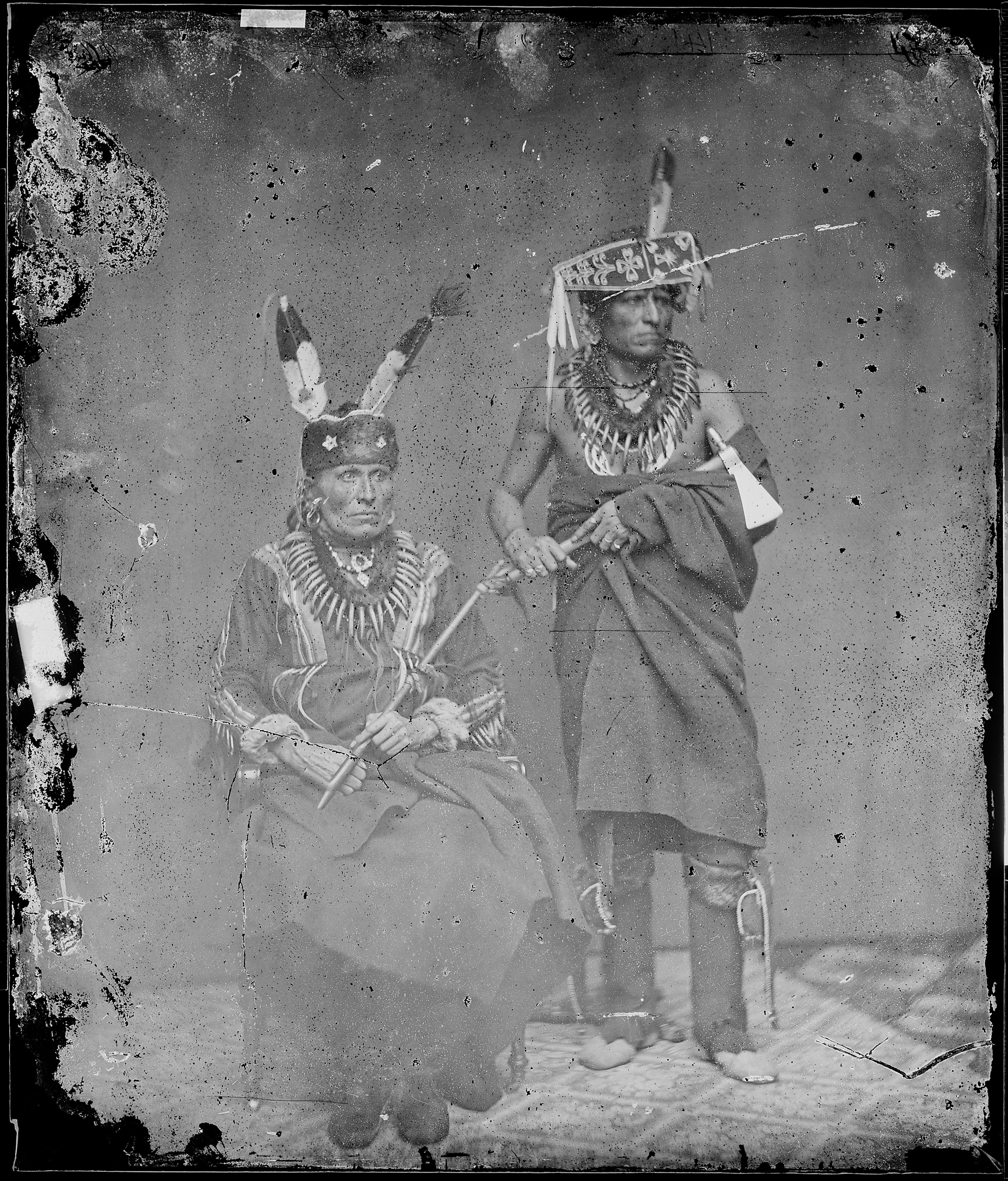
Pawnee Chiefs
The Pawnee originally inhabited lands in Nebraska and Kansas. They lived in permanent villages in domed-shaped lodges and grew corn, beans, squash, and pumpkins. During the bison hunting season, the hunters followed the herds across the Plains and lived in tipis.
The Pawnee were a confederacy comprised of four distinct autonomous bands, each led by a hereditary chief. In the 1860s during the Indian Wars, they notably served as U.S. Army scouts, known as the Pawnee Battalion. In 1874, they sold their reservation land in Nebraska, and in 1876 were removed from their reservation to the new one in Oklahoma. At that time they numbered about two thousand.
The Pawnee lands in Oklahoma extended south to include some of the lands ceded by the Creeks. The Pawnee reservation was the largest within the limits of the Ponca Agency. Within a few years of relocation to Oklahoma, diseases had reduced them to less than one thousand, in spite of the fact that their new home was a beautiful and healthful region of over three hundred thousand acres.
The city of Pawnee, is the county seat of Pawnee County, Oklahoma.
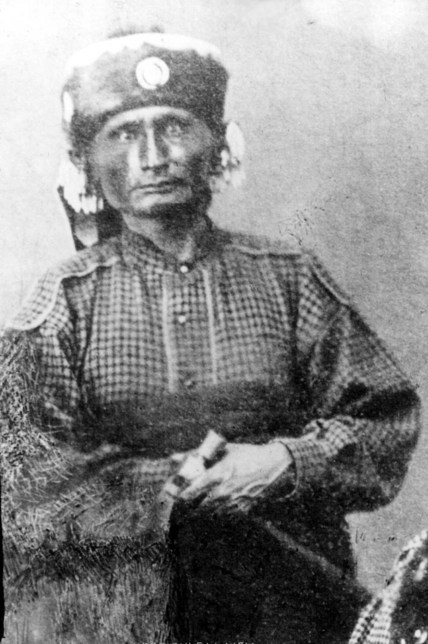
Kaw Chief Al-le-ga-wa-ho, 1867
The Kaw people, also known as the Kanzas, were a Midwestern tribe closely associated with the Osage people. The state of Kansas was named for the Kaw, the Kaw,/Kansas River in Kansas was named for the Kaw, and Topeka, the state capitol of Kansas, is a Kaw word meaning "A good place to grow potatoes".
US govenrment pressure and a declining population forced the Kaw out of Kansas. On June 4, 1873, they relocated to a new reservation in Oklahoma. In Oklahoma their population continued to dwindle. They leased their land to white cattlemen for grazing to support their peoples. As a result of the Curtis Act of 1898, Congress abolished the Kaw tribal government and reservation and divided tribal lands among members in individual allotments. Most of the Kaw sold or lost their land. In the 1960s, most of of their land was inundated by the building of Kaw Lake, including their Council House and cemetery. The cemetery was relocated to Newkirk, Oklahoma.
Kaw City is located in Kay County, Oklahoma, and is the tribal headquaters for the Kaw Nation.
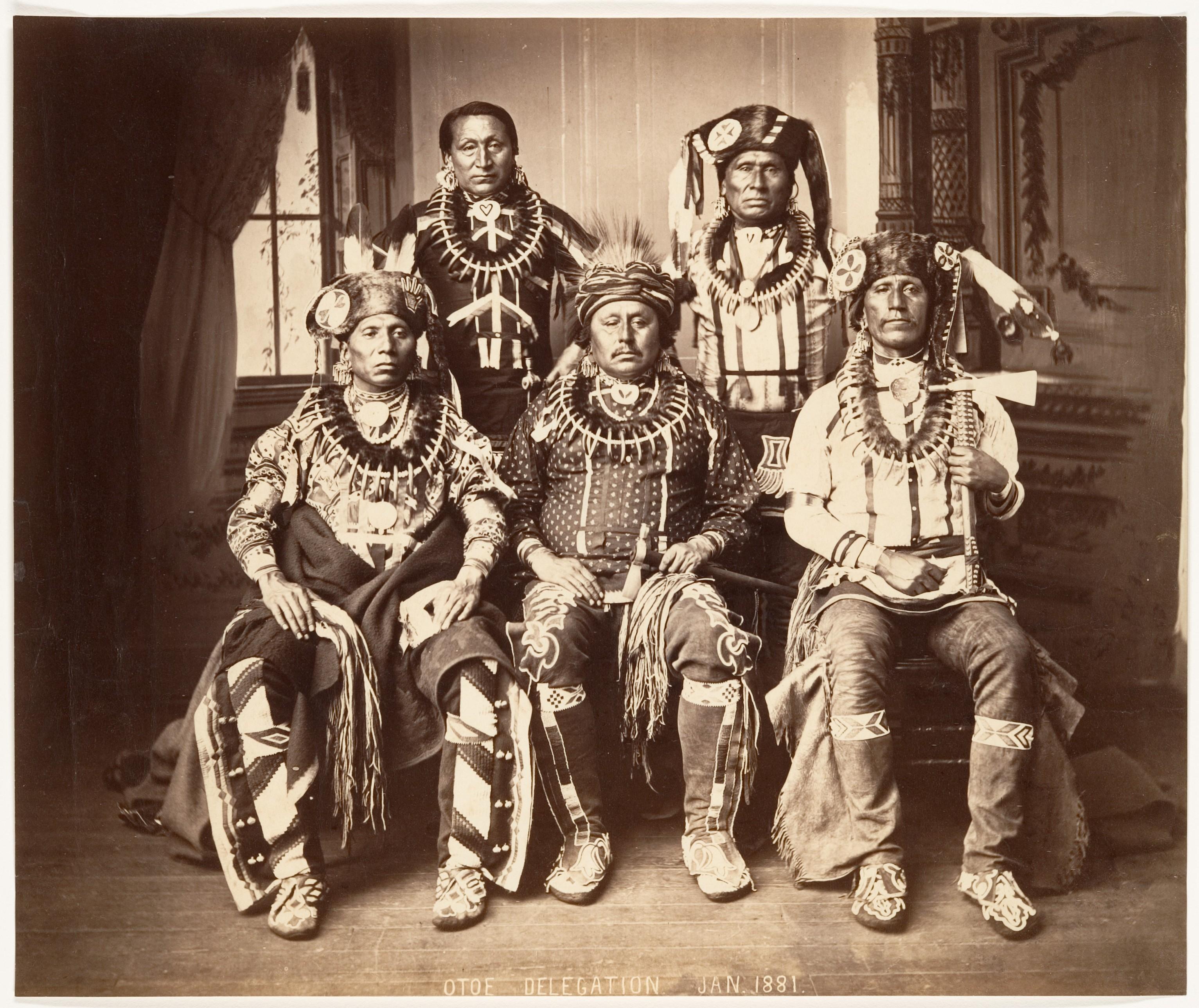
Missourias
The Otoes and Missourias reservation was to the south of the Ponca lands consisting of about one hundred thirty thousand acres. Their former reservation lay partly in Kansas and partly in Nebraska. They were moved to their new home in 1882 in Oklahoma. The two tribes were small and numbering about three hundred.
The last fluent speakers of Ioway-Otoe-Missouria passed away in the winter of 1996, both in their 90s. There are approximately a half dozen semi-fluent speakers born during or prior to WWII.
The existing tribal entities are usually called Otoe, or Otoe-Missouria, and Ioway. The Missouria were absorbed by the Otoe in 1850s and ceased to be autonomous.
The Otoe-Missouria have their tribal offices at Red Rock, Noble County, OK. The Iowa of Oklahoma offices are located several miles south of Perkins, Payne County, Oklahoma, while the Iowa of Kansas & Nebraska have their tribal complex several miles west of White Cloud, in Doniphan County, Kansas.
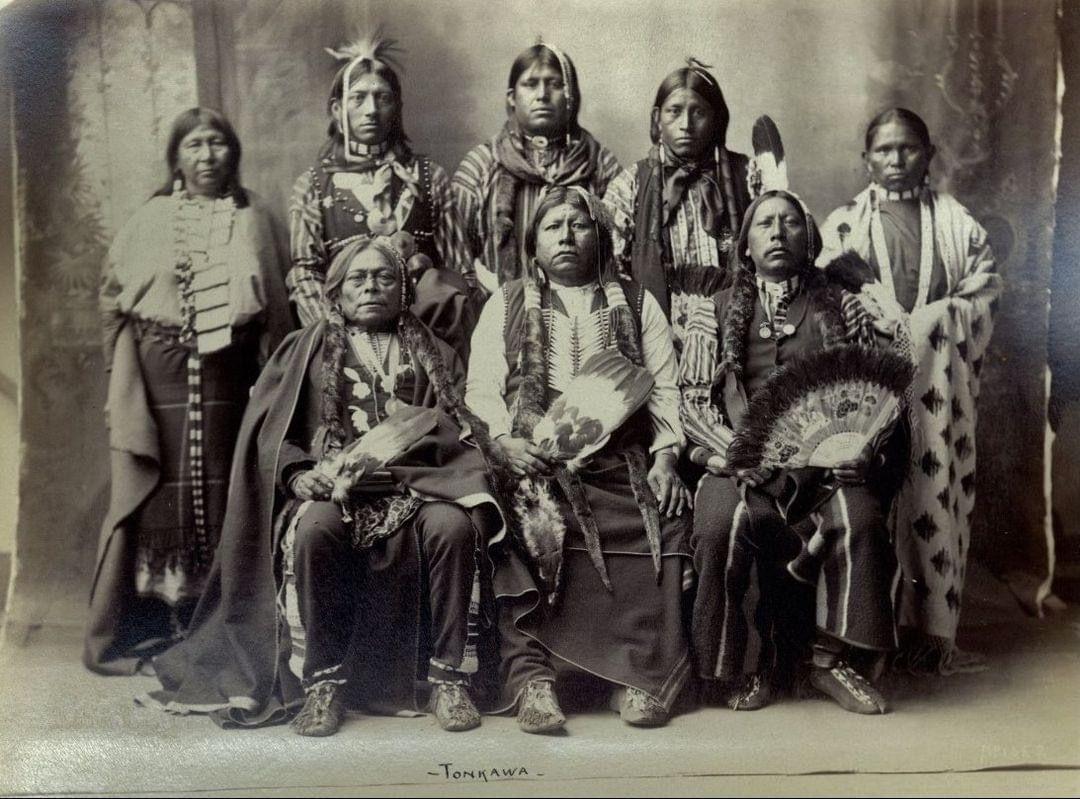
Tonkawas Standing: Winnie Richards, John Rush Buffalo, William Stevens, John Allen, and Mary Richards. Seated: John Williams, Grant Richards, and Sherman Miles.
The Tonkawa tribe was given the fourth reservation. These Indians were placed north and west of the Poncas on a reservation that had formerly been given to Chief Joseph and a band of Nez Perces from Idaho. The Nez Perces were not happy there, however, and after a few years they were allowed to return to the hills and mountains of their former home. The Tonkawa's where were then given the lands, were a poor and uneducated people numbering fewer than a hundred. They had formerly lived in Texas, but during the War Between the States, they came to Oklahoma and encamped on the Washita River near Anadarko. Here, in December 1862, other Indians attached them, and a large part of them were killed. The remainder fled, and after living in Texas for a time, was brought to the Oklahoma reservation in 1884.
The Tonkawas and the Nez Perces shared land in the Oakland Reservation. Fort Oakland is a historical site located in Kay County, Oklahoma, about 2.5 miles southeast of the city of Tonkawa, Kay County, Oklahoma.
Page updated:

State Coordinator: Linda K. Lewis
Asst State Coordinator: Rebecca Maloney
Designed by Templates in Time