


Welcome to the Pawnee section of OKGenWeb. If you are researching a Pawnee ancestor, you may find that the family story reaches across Nebraska, Kansas, Indian Territory, and Oklahoma. The Pawnee lived for centuries in the central Great Plains, established villages along the Platte and its tributaries, and maintained a way of life centered on agriculture, buffalo hunting, and a rich ceremonial tradition. During the nineteenth century, disease, warfare, increasing settlement, and the loss of their lands brought profound changes to the Pawnee people. Most Pawnee families moved south from Nebraska to a new reservation in Indian Territory during 1874 and 1875. Their new home became the center of the present-day Pawnee Nation in north-central Oklahoma.
For genealogists, the Pawnee story is particularly well documented. Federal Indian census records, Pawnee Agency records, allotment records, school records, and birth and death records can provide information that is difficult to find in ordinary county records. Earlier research may lead to Nebraska and Kansas, while later research often centers on Pawnee County and the Pawnee Agency.
| Year | Event |
|---|---|
| 1500s-1600s | The Pawnee occupied portions of the central Great Plains, particularly along the Platte River and its tributaries in present-day Nebraska and northern Kansas. |
| 1700s | The Pawnee developed a network of permanent earth-lodge villages and seasonal buffalo-hunting movements across the Great Plains. |
| 1803 | The Louisiana Purchase brought the United States into possession of the region west of the Mississippi River, including the Pawnee homeland. |
| 1831 | Presbyterian missionaries John Dunbar and Samuel Allis began missionary work among the Pawnee. |
| 1833 | The Pawnee ceded their lands south of the Platte River to the United States. |
| 1849 | A devastating cholera epidemic killed more than a thousand Pawnee, contributing to a severe population decline. |
| 1857 | The Pawnee signed the Treaty of Table Creek, accepting a much smaller reservation along the Loup Fork of the Platte River. |
| 1860s | Pawnee men served as scouts with the United States Army during the Plains Indian Wars and helped protect construction of the Union Pacific Railroad. |
| 1873 | The Pawnee suffered major losses during the Battle of Massacre Canyon in Nebraska. |
| 1874 | The Pawnee began the removal from Nebraska to a new reservation in Indian Territory. |
| 1875 | Most Pawnee families completed the move south. The Pawnee Agency was established near the present town of Pawnee, Oklahoma. |
| 1879 | Pawnee children began attending off-reservation boarding schools, including Carlisle Indian Industrial School, as well as schools in Oklahoma and Kansas. |
| 1882 | The federal allotment policy began changing Pawnee reservation life from communal landholding toward individual farms. |
| 1887 | The Dawes Act established a federal system for allotting reservation land to individual Indian families. |
| 1891 | The Pawnee agreed to take individual allotments. |
| 1893 | The remaining unallotted Pawnee lands were opened to non-Indian settlement as part of the Cherokee Outlet Opening. |
| 1901 | The Pawnee population reached a low point of approximately 629 people. |
| 1906 | The Pawnee no longer had a formal tribal government, although hereditary chiefs continued to represent the people in some matters. |
| 1936 | The Pawnee adopted a new tribal constitution under the Oklahoma Indian Welfare Act. |
| 1937 | Pawnee leaders began a long effort to regain the remaining Pawnee Reserve lands surrounding the agency. |
| 1968 | Ownership of the former Pawnee Reserve lands surrounding the agency was returned to the Pawnee Tribe. |
| Today | The Pawnee Nation maintains its headquarters and tribal community in Pawnee, Oklahoma. |
The Pawnee are a Caddoan-speaking people whose historic homeland was in the central Great Plains. During the late eighteenth and early nineteenth centuries, Pawnee villages were located along the Platte River and its tributaries in central Nebraska and northern Kansas. The Pawnee were not a single village but were traditionally organized into four major divisions or bands: the Skidi, Chaui, Kitkehahki, and Pitahawirata. The Skidi spoke a distinct Pawnee dialect, while the other three groups spoke another Pawnee dialect.
Pawnee communities lived in permanent earth-lodge villages during much of the year. Families cultivated corn, beans, and squash and also depended heavily upon the buffalo. Seasonal movements to the Plains for buffalo hunting formed an important part of the traditional annual cycle. The village was an important unit of Pawnee social organization. Each band maintained its own villages, chiefs, priests, sacred bundles, and ceremonial traditions. These divisions and community names can sometimes appear in historical and genealogical records.
When researching an older Pawnee ancestor, pay attention to references to the individual's band. The 1887 Pawnee census, for example, identifies the Petahowerat, Skeedee, Chowee, and Kitkahock bands.
The nineteenth century brought increasing pressure on the Pawnee homeland. American emigrants, military expeditions, commercial traffic, and the removal of other Native nations into the Great Plains transformed the region. In 1833 the Pawnee ceded their lands south of the Platte River. The Treaty of Table Creek in 1857 reduced their remaining homeland to a reservation along the Loup River in Nebraska. Disease was devastating. Epidemics of cholera and smallpox caused enormous losses. Warfare with neighboring Plains peoples, particularly the Sioux, also resulted in the deaths of many Pawnee. The population decline was severe. The Pawnee had numbered many thousands during the eighteenth century, but by the time of their removal to Indian Territory their population had fallen dramatically.
The Pawnee relationship with the United States military is an important part of nineteenth-century Pawnee history. Pawnee men served as scouts during the Plains Indian Wars, including campaigns against the Sioux, Cheyenne, and Arapaho. The first large enlistment included Pawnee scouts who served during the 1865-1866 Powder River Expedition. Additional Pawnee scouts helped protect workers constructing the Union Pacific Railroad during the late 1860s. Pawnee scouts served again during the campaigns of 1876-1877. For genealogists, military service can provide an additional avenue for research. A Pawnee ancestor who served as a scout may appear in Army records in addition to tribal and agency records.
By the early 1870s the Pawnee faced continuing attacks, declining population, and increasing pressure on their Nebraska reservation. In 1874 the tribe began moving south to Indian Territory. The journey was difficult. During the winter of 1874-1875, approximately 1,400 Pawnee men, women, and children traveled hundreds of miles from Nebraska toward their new home. Some Pawnee groups had already moved south in smaller groups, but the main migration occurred during this period.
The new reservation was located in Indian Territory on land purchased from the Cherokee and Muscogee nations. It lay between the Arkansas and Cimarron Rivers, in the area that became much of present-day Pawnee County. The Pawnee Agency was established near the present town of Pawnee in 1875. The agency became the center of federal administration for the tribe and is extremely important to genealogists researching Pawnee families.
The Pawnee initially attempted to maintain elements of their traditional village organization after moving south. Each band occupied a separate area, and farming was initially conducted cooperatively. Over time, individual families moved onto separate farms. Federal policies increasingly encouraged the Pawnee to abandon communal landholding and traditional practices in favor of individual agriculture and American-style education.
The Pawnee Industrial Boarding School was established at the agency. Pawnee children also attended schools away from the reservation, including Carlisle Indian Industrial School, Hampton Institute, Chilocco, and Haskell. These schools are important sources for genealogy because school records can identify children, parents, ages, residences, and tribal affiliations.
The federal allotment system changed Pawnee land ownership permanently. Under the allotment policies of the late nineteenth century, tribal lands were divided into individual parcels. In 1891 the Pawnee agreed to receive individual allotments. The remaining lands were subsequently opened to non-Indian settlement. The Cherokee Outlet Opening took place on September 16, 1893, and settlers entered the area that had previously been part of the Pawnee reservation. For genealogists, the 1891-1893 period is especially important. An allotment file can connect an individual to a specific parcel of land and may provide information not found in census records.
Pawnee genealogy is often best approached through the federal Indian records rather than relying solely on county records. The Pawnee Agency maintained extensive records concerning tribal members and families. The Oklahoma Historical Society's American Indian Census collection includes Pawnee census records, birth and death records, allotment information, and school records. The National Archives also holds Pawnee Agency records.
The Pawnee census records are among the most valuable sources for reconstructing Pawnee families in Oklahoma. The National Archives' Indian Census Rolls, 1885-1940, are available on microfilm publication M595 and have also been digitized by commercial genealogy providers. The records commonly contain an individual's name, roll number, age or date of birth, sex, and relationship to the head of the family, although the information varies by year.
The Oklahoma Historical Society identifies the following Pawnee census records:
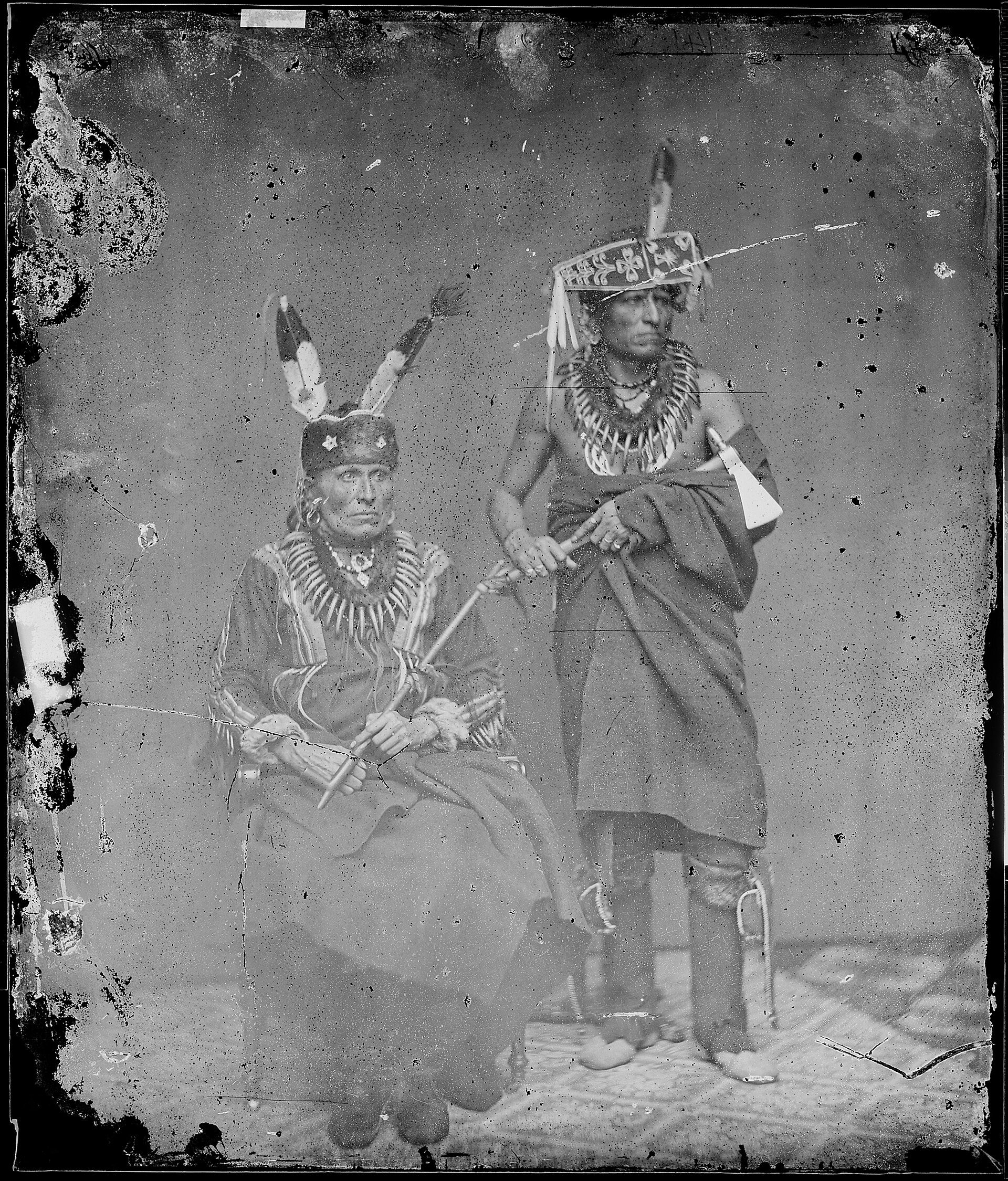
Pawnee Chiefs
The Pawnee Agency is one of the most important record groups for Pawnee genealogy. The Oklahoma Historical Society holds Pawnee Agency records dating from 1872 through 1933, while the National Archives at Fort Worth holds Pawnee Agency records dating from 1901 through 1990. Agency records may include correspondence, census material, land matters, education records, health information, financial records, tribal affairs, and other administrative material. Remember that federal agencies sometimes served more than one tribe. Records concerning Pawnee individuals can therefore occasionally appear in related agency collections.
The Oklahoma Historical Society identifies a specific Pawnee allotment record set: the Pawnee Allotments, Index and Allotment Numbers 1-820: 1893. The source is the Oklahoma Department of Libraries schedule of land allotments. This index can be an important starting point for identifying an ancestor's allotment number. Once the allotment number is known, additional land and federal records may be easier to locate.
The Pawnee were not enrolled through the Dawes Commission in the same manner as the Five Civilized Tribes. Researchers should therefore avoid assuming that a Pawnee ancestor will have a Dawes enrollment card simply because the ancestor lived in Indian Territory. For Pawnee families, the Pawnee Agency census and Pawnee allotment records are especially important. Federal land records and the Bureau of Indian Affairs may provide additional documentation.
The Pawnee Indian census collection includes specialized birth and death records. The National Archives microfilm series identifies Pawnee birth records beginning in the 1920s and death records covering the same general period. These records can be especially valuable for establishing relationships between parents and children during a period when ordinary Oklahoma civil records may not contain all the information a researcher needs.
Important Pawnee records include:
School records can provide an important bridge between generations. The Pawnee Agency maintained records concerning children attending the agency school and other schools. Pawnee children also attended off-reservation schools. Some attended Carlisle Indian Industrial School in Pennsylvania, Hampton Institute in Virginia, Chilocco Indian Agricultural School, and Haskell Institute in Kansas. The Oklahoma Historical Society notes that school records can appear under the agency responsible for the student rather than under the name of the school. Researchers should therefore search both Pawnee Agency records and the records of the school attended.
If your Pawnee ancestor was born before the move to Indian Territory, Nebraska records are essential. The Pawnee reservation near Genoa was the last major Pawnee homeland in Nebraska. Useful Nebraska sources include:
The four Pawnee bands may also be important when interpreting older records. A record identifying a person as Skidi, Chaui, Kitkehahki, or Pitahawirata can help distinguish individuals with similar names.
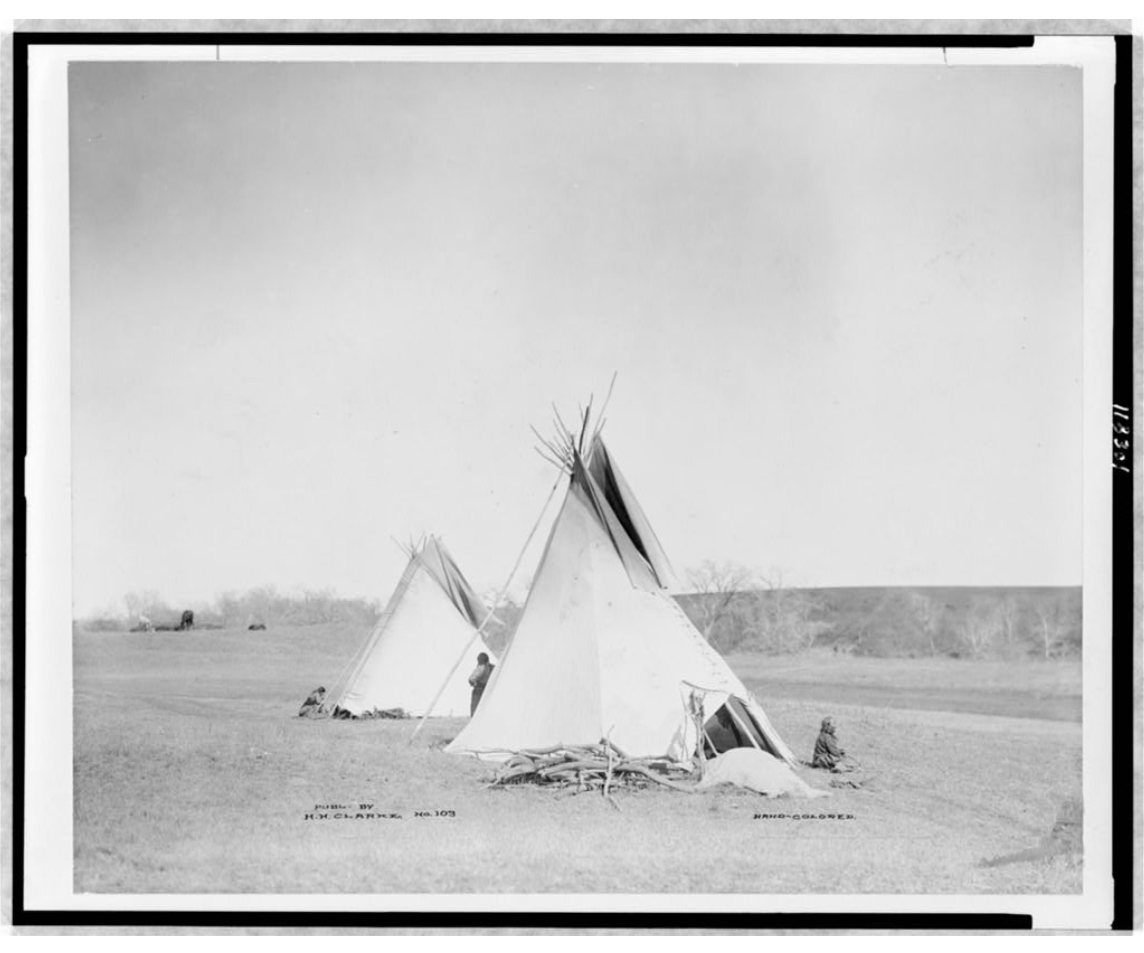
Pawnee Encampment
Bliss, OK, 1892
Kansas is also part of the Pawnee research trail. Pawnee hunting territory extended into northern Kansas, and historical references may identify Pawnee individuals or villages in Kansas even when the family later appears in Nebraska records. Researchers should also remember that the Pawnee removal route passed through Kansas. Pawnee families spent time in Kansas during the journey south in 1874-1875, and records concerning the removal may contain names of individuals and families. The Kansas Historical Society and local county repositories can be useful for newspapers, military records, maps, and other documentation concerning the Pawnee in Kansas.
Pawnee County was created after the opening of the Cherokee Outlet. The county and the town of Pawnee both take their names from the Pawnee people. The Pawnee Agency and Pawnee Industrial School were located near the present town of Pawnee. Because the area was once the Pawnee reservation, county records should be used together with federal Indian records rather than treated as the only source for Pawnee genealogy. After the 1893 land opening, new communities developed throughout the county. A Pawnee family may therefore appear in both Indian agency records and ordinary county records within the same generation.
When beginning a Pawnee genealogy project, work backward from the most recent known generation and use several record groups together.
When searching records, keep a list of the names and locations associated with the family. Historical records may use different spellings or refer to a person by a band, village, or English name.
The Pawnee Nation continues to maintain its government, cultural traditions, and community in Pawnee, Oklahoma. The former Pawnee Agency area remains an important center of Pawnee identity. The Pawnee Nation has worked to preserve and reclaim important pieces of its historic homeland. The former Pawnee Reserve lands surrounding the agency were returned to the tribe in 1968. Former Pawnee Industrial School buildings are also part of the tribal community and are used for tribal and educational purposes. The annual Pawnee Indian Veterans Homecoming Celebration, begun in 1946, continues to bring Pawnee families and descendants home to Pawnee. Events such as the homecoming illustrate the continuing importance of family, community, and connection to the Pawnee homeland.
Pawnee genealogy can take you through some of the most important chapters in the history of the central Plains. Your ancestor may have lived in a Pawnee earth-lodge village along the Platte, survived the epidemics and conflicts of the nineteenth century, served as a Pawnee scout, lived on the Nebraska reservation, traveled south to Indian Territory, attended a federal Indian school, received an allotment, or established a family farm in what became Pawnee County.
The records created during these transitions can help bring those stories together. The Pawnee Indian census, Pawnee Agency records, allotment schedules, school records, and Nebraska and Kansas sources can be especially valuable when used together. As you follow your family from one record to the next, you may be able to reconstruct not only individual generations but also the remarkable journey of the Pawnee people from their Great Plains homeland to their present-day home in Oklahoma.
Page updated:

State Coordinator: Linda K. Lewis
Asst State Coordinator: Rebecca Maloney
Designed by Templates in Time