


Welcome to the Nez Perce history and genealogy page. Whether you are tracing a Nez Perce ancestor connected to Oklahoma, researching the history of the Southern Nez Perce, or following a family between the Pacific Northwest and Indian Territory, these resources can help you discover the people and places connected to your family history.
The Nez Perce, known in their own language as Nimiipuu, have ancestral homelands in the Pacific Northwest. In the nineteenth century, some Nez Perce families were removed to Indian Territory following the conflict of 1877. Their descendants became part of the Nez Perce community in present-day Oklahoma. Oklahoma research may therefore need to be combined with records from Idaho, Washington, Oregon, Montana, and other areas of the Pacific Northwest. Begin with your most recent documented ancestor and work backward through census, agency, allotment, school, military, and other records.
| Year | Event |
|---|---|
| 1700s | The Nez Perce occupied a large homeland in the Pacific Northwest, including areas of present-day Idaho, Washington, and Oregon. |
| 1805 | Lewis and Clark encountered the Nez Perce during their expedition. The Nez Perce provided assistance to the expedition and helped the travelers prepare for their journey west. |
| 1855 | The Nez Perce signed a treaty with the United States establishing a large reservation in the Pacific Northwest. |
| 1863 | A second treaty greatly reduced the Nez Perce reservation. Not all Nez Perce accepted the agreement, contributing to divisions within the community. |
| 1877 | Nez Perce bands attempting to avoid removal were pursued by the U.S. Army. The Nez Perce War ended at Bear Paw in Montana after the group traveled toward Canada. |
| 1877 | After the surrender, many Nez Perce were transported to Indian Territory rather than being permitted to return immediately to their Pacific Northwest homeland. |
| 1877-1878 | Nez Perce prisoners and their families were taken to Indian Territory. Many were held at the Quapaw Agency in northeastern Indian Territory. |
| 1879 | Chief Joseph and other Nez Perce representatives traveled to Washington, D.C., to seek justice and permission for their people to return home. |
| 1885 | Most of the Nez Perce held in Indian Territory were allowed to return to the Pacific Northwest. A smaller group remained in Indian Territory. |
| 1890s | Nez Perce people who remained in Indian Territory were included in federal Indian agency and census records. |
| 1900s | Nez Perce families in Oklahoma continued to appear in federal Indian census, agency, land, school, and vital records. |
| Today | Nez Perce descendants live in Oklahoma as well as Idaho and other parts of the Pacific Northwest. The federally recognized Nez Perce Tribe is headquartered in Idaho. |
The Nez Perce, or Nimiipuu, traditionally occupied a large area of the inland Pacific Northwest. Their homeland included the Clearwater, Snake, and Salmon River regions and extended across portions of present-day Idaho, Washington, and Oregon. The Nez Perce developed a highly mobile seasonal way of life based on fishing, hunting, gathering, and trade. Salmon was particularly important to Nez Perce communities, and the rivers of their homeland played a central role in their culture and economy. European and American expansion brought increasing pressure on Nez Perce lands during the nineteenth century. Treaties in 1855 and 1863 resulted in major changes to the size and boundaries of the Nez Perce reservation.
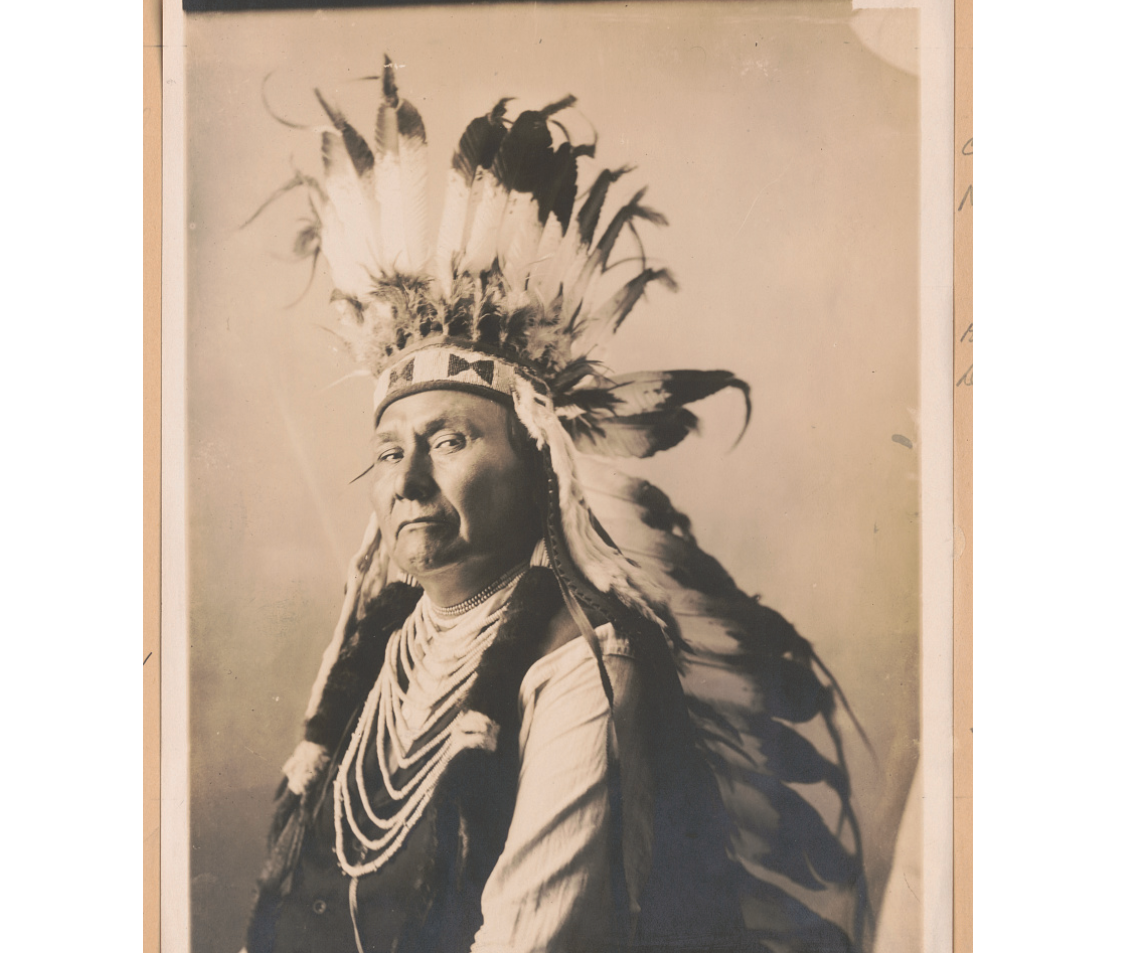
Chief Joseph, 1900
Nez Perce
The events of 1877 are central to understanding why Nez Perce families appear in Oklahoma records. Several Nez Perce bands refused to leave their homeland after the United States ordered them onto the reduced reservation. In June 1877, the bands began a difficult journey toward Canada while being pursued by the U.S. Army. The Nez Perce traveled more than 1,000 miles before being stopped near the Canadian border in Montana. Chief Joseph surrendered on October 5, 1877. Although some Nez Perce were later permitted to return to the Northwest, many were first transported to Indian Territory.
Following the 1877 conflict, approximately 400 Nez Perce were transported to Indian Territory. They were initially sent to the Quapaw Agency in northeastern Indian Territory, where they lived alongside other Native peoples who had been relocated to the region. The climate, disease, inadequate housing, food shortages, and unfamiliar environment created severe hardships. Many Nez Perce died during their years in Indian Territory. The Nez Perce community in Indian Territory was eventually divided. In 1885, most of the surviving Nez Perce were permitted to return to the Pacific Northwest. Some individuals and families remained in Oklahoma.
Researching a Nez Perce ancestor connected to Oklahoma may require looking in both Oklahoma and the Pacific Northwest. A family may appear in Idaho or Washington records before 1877, in Indian Territory records during the 1877-1885 period, and then in Pacific Northwest records after the return. Historical records may use Nez Perce, Nez Perce, Nimiipuu, or other spellings. Individual names may also have been written differently by English-speaking officials. When searching, record every version of a person's name and compare ages, relatives, locations, and other identifying information. Do not rely solely on a surname, particularly for nineteenth-century records.
Federal Indian census records can be especially useful for identifying Nez Perce families who remained in Oklahoma after 1885. SThe Quapaw Agency is particularly important for the Nez Perce because many of the people removed to Indian Territory were initially placed there. Search for Nez Perce individuals in records associated with:
Quapaw Agency records are an important starting point for researching Nez Perce families in Indian Territory after 1877. Agency records can include census rolls, correspondence, financial records, education records, health information, land records, and other administrative documents. Because the Nez Perce were only temporarily located at the Quapaw Agency as a group, researchers should pay close attention to the dates of each record. An ancestor may appear in Quapaw Agency records for only a few years before returning west or remaining in Oklahoma.
The records surrounding the Nez Perce War and subsequent removal can be particularly valuable for genealogy. Military correspondence, prisoner lists, government reports, agency records, and congressional documents may identify individuals or family groups. These records can sometimes provide information not found in later census rolls, particularly for people who died before the Nez Perce were permitted to leave Indian Territory.
School records may provide another way to identify Nez Perce children and their families. Federal Indian schools and agency schools kept enrollment and attendance records that can include names, ages, parents, tribal affiliation, and residence. For an Oklahoma family, school records can help establish relationships between children and parents when census records are incomplete.
Land and allotment records can be useful for Nez Perce individuals who remained in Oklahoma. These records may identify a person's name, tribal affiliation, age, allotment, residence, and heirs. However, researchers should distinguish between the Oklahoma Nez Perce community and the much larger Nez Perce population associated with the Nez Perce reservation in Idaho. An Oklahoma land record does not necessarily indicate that the individual was part of the federally recognized Nez Perce reservation community.
For many families, the best approach is to research both sides of the migration.
In Oklahoma, search:
In the Pacific Northwest, search:
Chief Joseph is one of the best-known Nez Perce leaders associated with the events of 1877. His story is important to understanding the history of the Nez Perce, but genealogy research should not assume that every Nez Perce family in Oklahoma was directly related to him. Researchers should build each family connection from documented records. Family relationships recorded in census, agency, church, school, and other records are more useful genealogically than assuming a relationship based on surname or community association.
Nez Perce genealogy connected to Oklahoma is a story of migration, separation, and return. A family may appear in Pacific Northwest records before 1877, in Indian Territory records during the years of removal, and then in Oklahoma or Northwest records afterward. For the strongest results, follow individuals rather than relying only on tribal names. Use census and agency records to establish a family group, then use school, vital, land, military, and other records to confirm relationships.The Nez Perce who came to Indian Territory experienced a difficult and often overlooked chapter of their history. Their descendants remain part of the broader Nez Perce family, connecting Oklahoma with the ancestral homelands of the Nimiipuu in the Pacific Northwest.
Page updated:

State Coordinator: Linda K. Lewis
Asst State Coordinator: Rebecca Maloney
Designed by Templates in Time