


The Modoc are a Native people whose ancestral homeland was in the Klamath and Tule Lakes region along what is now the Oregon-California border. Their history took a dramatic turn in the nineteenth century when conflict with the United States resulted in the Modoc War of 1872-1873 and the forced removal of Modoc prisoners and their families to Indian Territory.
In November 1873, approximately 153 Modoc arrived at Baxter Springs, Kansas, after a difficult 2,000-mile journey from Oregon. They were then taken to the Quapaw Agency in northeastern Indian Territory. Their descendants continue to live in Oklahoma, and the Modoc Nation was federally recognized again in 1978.
| Year | Event |
|---|---|
| Before 1800 | The Modoc lived in their traditional homeland around the Klamath and Tule Lakes region of present-day southern Oregon and northern California. |
| 1830s | The Modoc acquired horses and expanded their activities throughout the surrounding region. |
| 1864 | The Modoc, Klamath, and Yahooskin Band of Snake Indians signed a treaty ceding their traditional lands to the United States and agreeing to live on a reservation in Oregon. The treaty was ratified in 1870. |
| 1872-1873 | The Modoc War took place after conflict between Modoc people and the United States. Captain Jack and his band resisted U.S. forces in the Lava Beds of northern California and southern Oregon. |
| 1873 | After the Modoc War, Modoc prisoners and their families were removed from the Northwest. Captain Jack and several other Modoc leaders were tried by military commission. |
| Oct 12, 1873 | Approximately 153 Modoc men, women, and children began their removal to Indian Territory. |
| Nov 16, 1873 | The Modoc arrived at Baxter Springs, Kansas, after their approximately 2,000-mile journey. |
| 1873-1874 | The Modoc were placed under the Quapaw Agency in northeastern Indian Territory. Temporary housing was established near the agency. |
| 1874 | Approximately 4,000 acres were purchased from the Eastern Shawnee for the Modoc. This became the principal land base of the Modoc community in Indian Territory. |
| 1878 | A Quapaw Agency Modoc Census of Subsistence and Ration was created. This record is particularly important to descendants researching Modoc ancestry. |
| 1891 | Modoc allotments were made. Only 68 Modoc remained to receive allotments, according to the Oklahoma Historical Society. |
| 1909 | The federal government authorized Modoc people in Oklahoma to return to the Klamath Reservation in Oregon if they wished. A minority returned, while most remained in Oklahoma. |
| 1954 | The Modoc and Klamath tribes were terminated from federal supervision. |
| 1967 | The Oklahoma Modoc established an informal tribal government. |
| 1978 | The Modoc Tribe of Oklahoma regained federal recognition. |
| 1991 | The Modoc adopted a tribal constitution. |
| Today | The Modoc Nation is headquartered in Miami, Oklahoma, and continues to preserve Modoc history, culture, language, and genealogical records. |
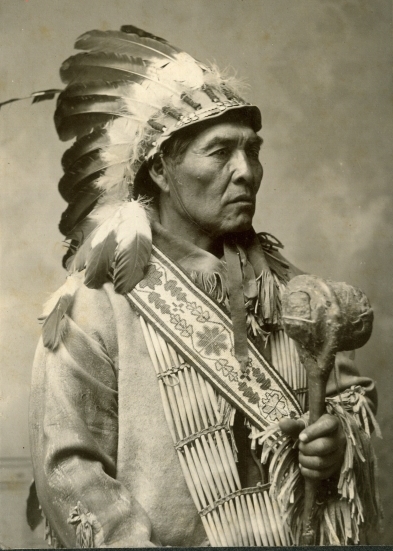
Modoc Yellow Hammer
Photo by Joseph Andrew Shuck before 1904
The traditional Modoc homeland extended across approximately 5,000 square miles along the present Oregon-California border, particularly around the Klamath and Tule Lakes. The Modoc shared the broader region with the Klamath and other Native peoples.
The Modoc language belongs to the Klamath-Modoc branch of the Plateau Penutian language family. The Modoc traditionally referred to themselves as Maklaks, meaning "people."
The Modoc War of 1872-1873 was the pivotal event that led to the Oklahoma Modoc community.
Following the 1864 treaty, the Modoc were expected to live on a reservation with the Klamath. Tensions over land, resources, living conditions, and relations between the communities contributed to increasing conflict. A group of Modoc led by Kintpuash, known as Captain Jack, left the reservation and returned to their traditional homeland.
The resulting conflict lasted from 1872 into 1873. Modoc fighters used the difficult terrain of the Lava Beds as a defensive position against U.S. forces.
After the war, Captain Jack and several other Modoc leaders were tried by a military commission. Captain Jack, Schonchin John, Black Jim, Boston Charley, Barncho, and Slolux were sentenced to death. Barncho and Slolux ultimately had their sentences commuted to life imprisonment at Alcatraz, while the other four were executed on October 3, 1873.
Following the Modoc War, Modoc prisoners and their families were forcibly removed from Oregon. On October 12, 1873, approximately 153 Modoc began the journey east. They traveled by wagon and railroad through the winter and arrived at Baxter Springs, Kansas, on November 16, 1873.
From Baxter Springs, they were taken to the Quapaw Agency in northeastern Indian Territory. The Modoc initially lived in temporary barracks and tents near the agency. In June 1874, approximately 4,000 acres were purchased from the Eastern Shawnee for their use.
The Modoc were therefore unusual among Oklahoma tribes: they were removed to Indian Territory from the Pacific Northwest rather than from the eastern United States or the Great Plains. The Modoc Nation describes itself as the only tribe relocated to Indian Territory from the West Coast.
The Quapaw Agency is central to the genealogy of Oklahoma Modoc families.
The Oklahoma Historical Society's guide to Quapaw Agency records specifically lists the Modoc among the tribes, bands, and communities associated with the agency. The agency's jurisdiction included numerous northeastern Oklahoma tribes, including the Modoc, Miami, Ottawa, Peoria, Quapaw, Seneca, Wyandot, and others.
National Archives records identify the Miami (Quapaw) Agency records as covering the Modoc from 1871-1970. Oklahoma Historical Society holdings cover related agency records from 1867-1936.
For a Modoc family historian, the Quapaw Agency may appear in records even when the family never belonged to the Quapaw Tribe.
Modoc genealogy is unusual because the federal government created a number of detailed records following the Modoc removal. These records can be especially valuable for descendants because they document Modoc families living at the Quapaw Agency during the late nineteenth and early twentieth centuries.
The 1878 Quapaw Agency Modoc Census of Subsistence and Ration is one of the most important records for descendants.
The Modoc Nation's current enrollment requirements specifically recognize ancestry traced to a person listed on the current tribal roll or the 1878 Quapaw Agency Modoc Census of Subsistence and Ration list. The Nation also identifies census, church, court, birth, death, marriage, baptismal, and other historical records as possible documentation of ancestry.
The National Archives and Oklahoma Historical Society identify a series of Modoc census records created through the Quapaw Agency:
These records are part of the National Archives' Indian Census Rolls, 1885-1940.
There are also Modoc census records for the Klamath Agency in Oregon. These can be important when researching family members who remained in Oregon or returned there after the 1909 legislation.
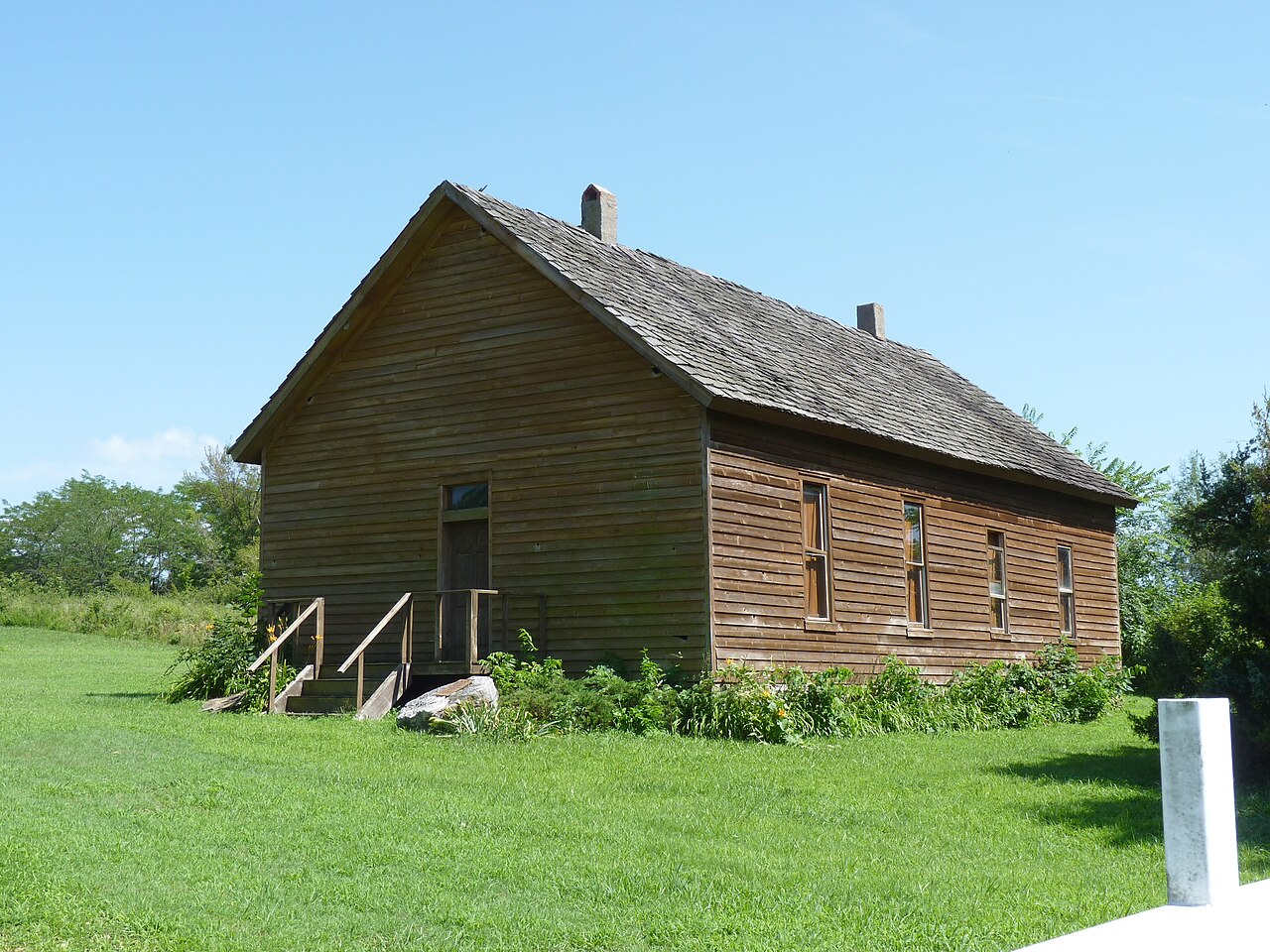
Modoc Mission Church
©Abe Ezekowitz, 2010.
Creative Commons Attribution-Share Alike 3.0 Unported license.
Although the Modoc did not establish a permanent Kansas reservation, Baxter Springs, Kansas, is an important location in Modoc history. It was the first stopping point in Kansas after the Modoc's removal from Oregon and the place where the federal authorities arranged their transfer to the Quapaw Agency.
For researchers, a Modoc ancestor appearing in Baxter Springs, Kansas, in November 1873 may subsequently appear in Quapaw Agency records in Indian Territory.
The Modoc community eventually became associated with northeastern Oklahoma, particularly present-day Ottawa County. The Modoc Mission Church and Cemetery southeast of Miami is an important historic site associated with the Oklahoma Modoc community. The site is listed on the National Register of Historic Places.
The Act of March 3, 1909, allowed Modoc people living in Oklahoma to return to the Klamath Reservation in Oregon. The Modoc Nation reports that 29 Modoc returned to Oregon, while the majority remained in Oklahoma.
This created two important research paths for descendants. Families who remained in Oklahoma can be followed through Quapaw Agency and Oklahoma records, while those who returned to Oregon may appear in Klamath Agency records.
The distinction is important because the Modoc Nation's present enrollment requirements specifically consider whether an ancestor remained in Oklahoma or returned to Oregon under the 1909 legislation.
The Modoc and Klamath tribes were terminated from federal supervision in 1954. Oklahoma Modoc continued to maintain a tribal government, and the Modoc Tribe of Indians in Oklahoma regained federal recognition in May 1978. A constitution was adopted in 1991.
For descendants of the Modoc, the story of removal provides a useful roadmap for genealogical research. Begin with the Modoc's traditional homeland and the records surrounding the Modoc War, then follow the family to Baxter Springs, Kansas, and from there to the Quapaw Agency in Indian Territory.
The 1878 Quapaw Agency Modoc Census is an especially important starting point. Later census rolls can then be used to follow families through the 1880s, 1890s, and early twentieth century. Researchers should also check Klamath Agency records for relatives who remained in Oregon or returned there after 1909.
The history of the Modoc in Oklahoma is a history of survival. Despite forced removal, loss of federal recognition, and the disruption of their community, the Modoc maintained their identity and rebuilt their government. The Modoc Nation continues that history today from its headquarters in Miami, Oklahoma.
Page updated:

State Coordinator: Linda K. Lewis
Asst State Coordinator: Rebecca Maloney
Designed by Templates in Time