


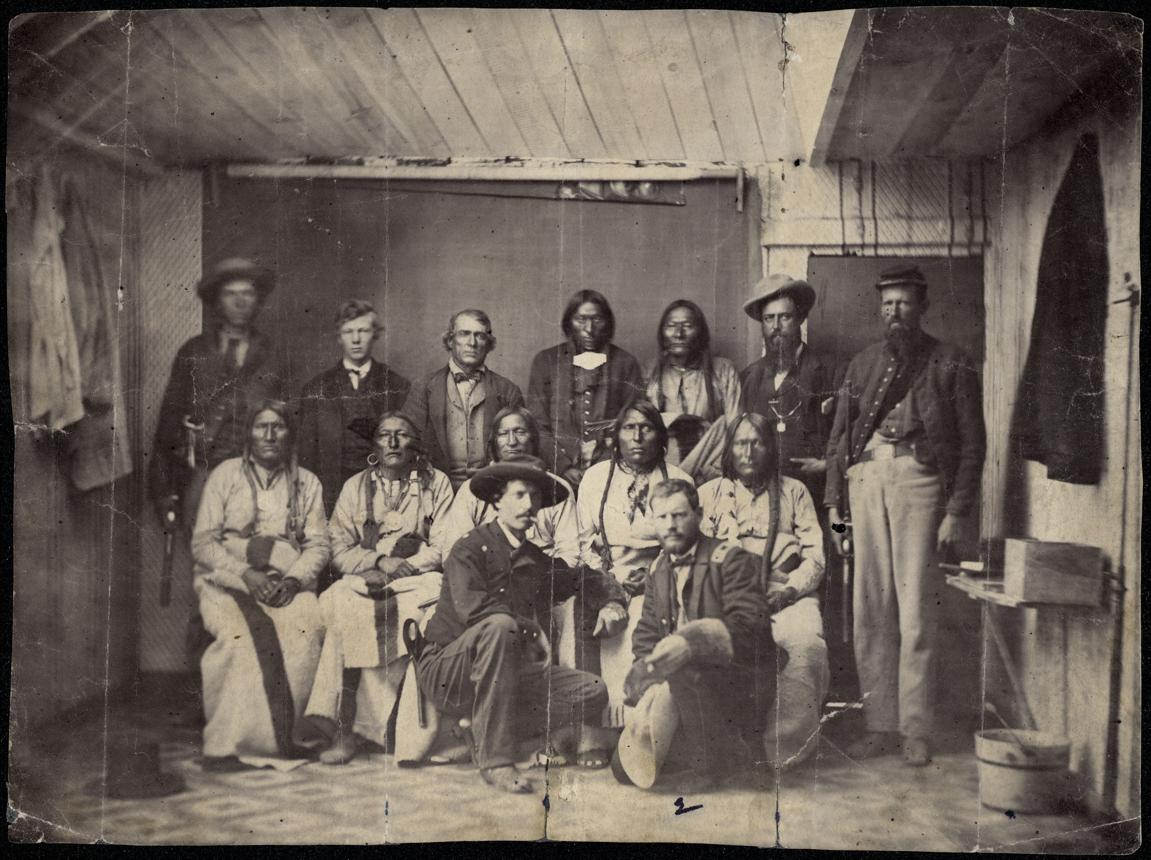
1864 Cheyenne-Arapaho Delegation
Beginning in 1811, the Cheyenne and Arapaho tribes formed an alliance to work together to increase and defend their lands. While they continued to have their own tribal leaders, by the 1830s they had formed a strong hunting, trading, and defense alliance. The the U.S. government officially recognized the southern bands of both tribes as a unified group under the 1851 Fort Laramie Treaty.
The Southern Cheyenne and Southern Arapaho were moved to Indian Territory (present-day Oklahoma) in 1867 under the Medicine Lodge Treaty. This was followed by with a formal executive order by President Grant in 1869 that established the Cheyenne & Arapaho lands.
The Arapaho retained a nominal tribal government and twelve chiefs were selected by the old scout and retired Arapaho Chief, Ute. The twelve chiefs were Jesse Rowlodge, David Meat, John Hoof, Dan Blackhorse, Ben Spotted Wolf, Bill Williams, Wilburn Tabor, John Sleeper, Annanita Washee, Scott Youngman, Saul Birdshead, and Thodore Haury (deceased). Two Cheyenne's were elected by custom to serve as Arapaho chiefs, Ben Buffalo and Ralph Whitetail.
The Oklahoma Organic Act of 1890 provided for the organization and government of Oklahoma amd divided the old Indian Territory in two parts - Indian Territory and Oklahoma Territory. The Cheyenne-Arapaho reservation was located in Oklahoma Territory. See Agreement with Cheyenne and Arapaho.
The lands of the Cheyenne-Arapaho country were to be decided by a "land run", a race for claims in the reservation. This run was held April 19, 1892.
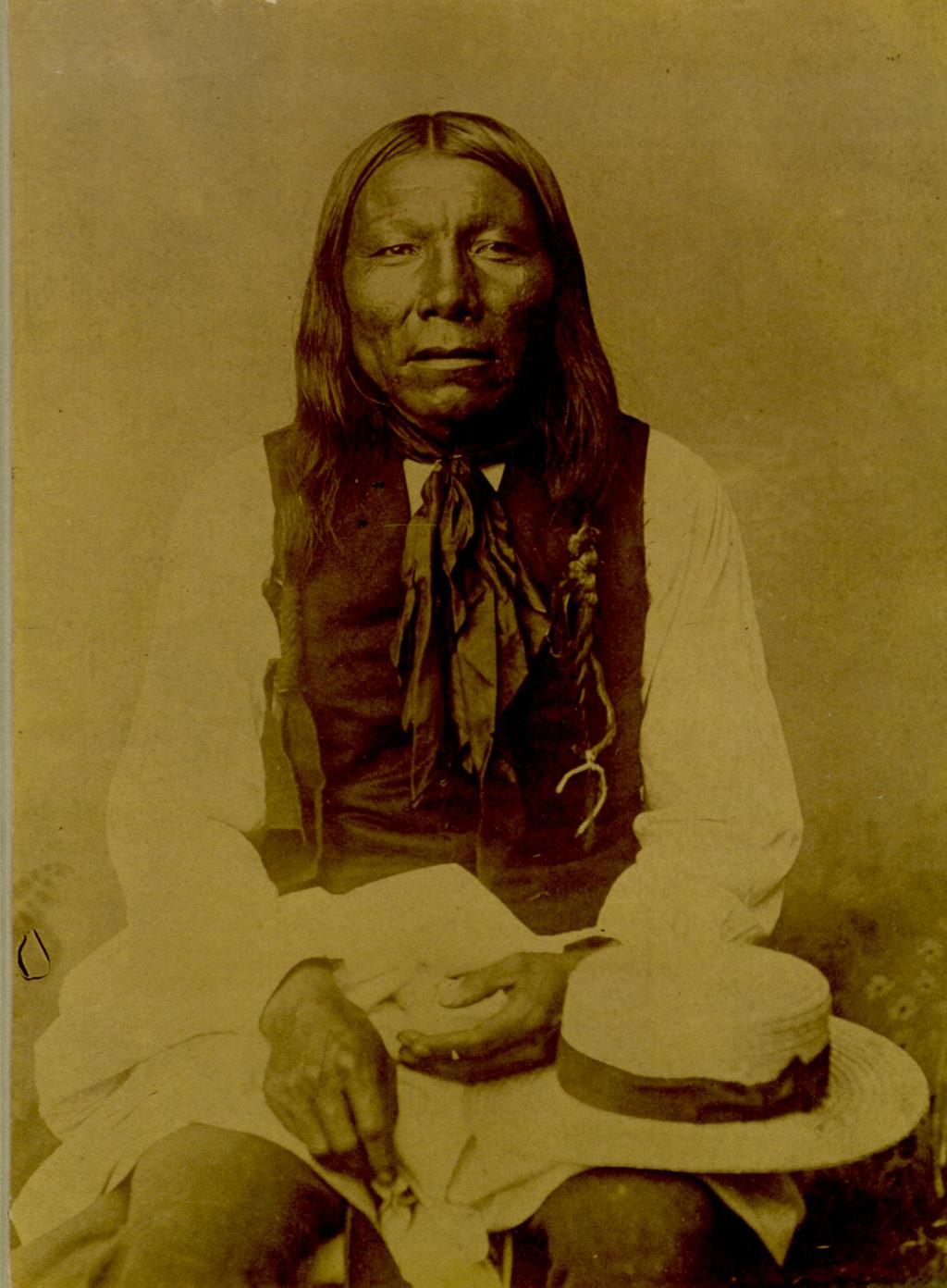
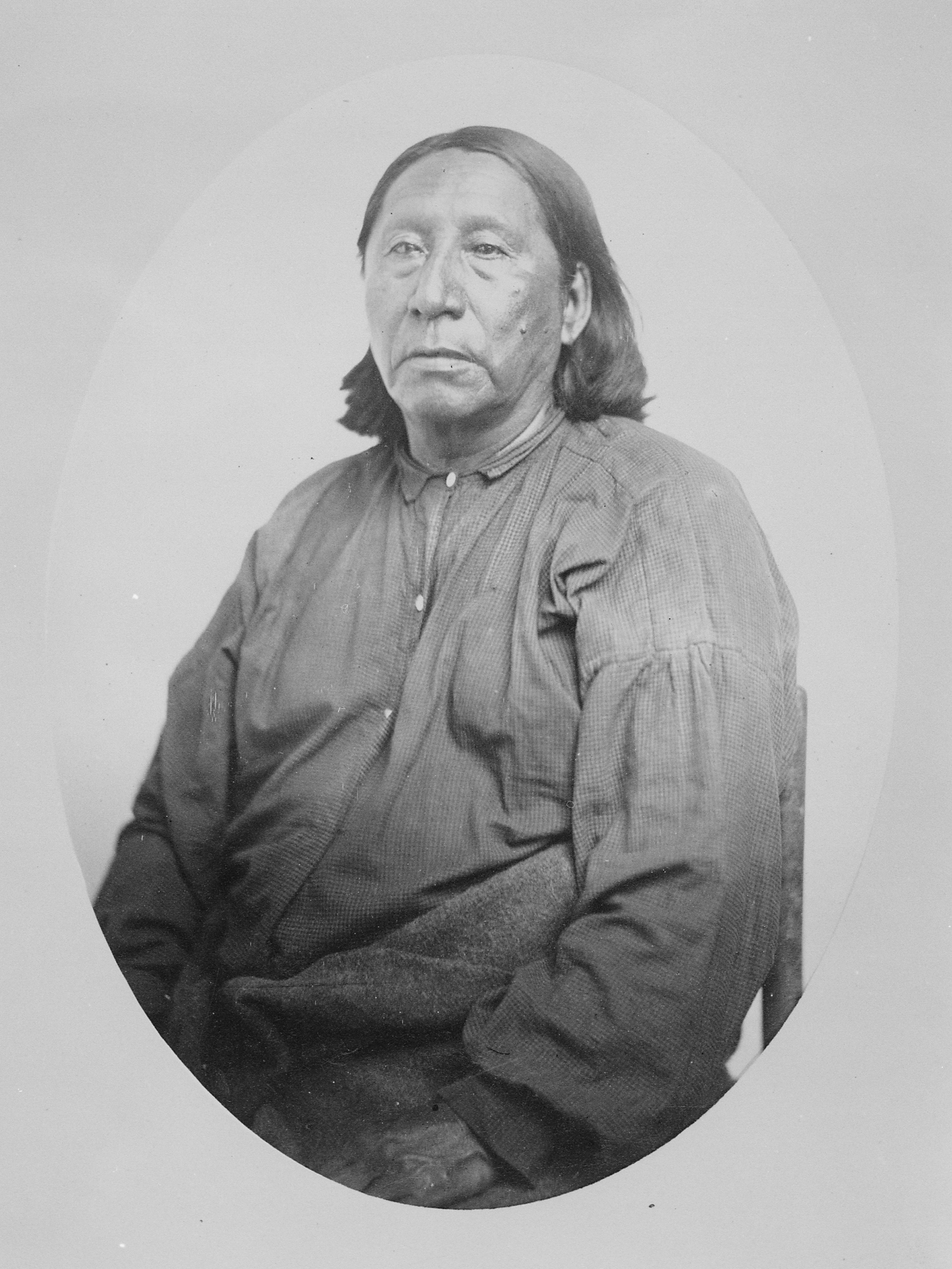
L: Cheyenne Chief Whirlwind, 1875, Okmlulgee
R: Arapaho Chief Little Raven, ca. 1870
Prior to the passage of the Organic Act of 1890, an Indian Commission of three men were appointed to to work with the Indians and persuade them to take their lands by allotment. The surplus would then be opened for settlement. The Indian Commission worked with the Cheyenne & Arapaho tribes at Fort Sill for several years, and finally the Jerome Agreement was signed. The Tribes were allotted their homesteads, and the remainder of the area would be available for settlement by others.
The Cheyenne & Arapaho received allotments and the remaining land was opened for settlement. On April 12, 1892, the proclamation was issued naming noon, April 19, 1892, as the date set for the opening. An estimated 25,000 people dashed across the line in the race for homes. The Proclamation added six new counties to Oklahoma Territory.
In July 1, 1910 another proclamation in which all the lands within what was formerly the Cheyenne and Arapahoe Indian Reservation, in the State of Oklahoma, and described in the said act of Congress, which in the judgment of the Secretary of the Interior are no longer needed or necessary, for the purposes for which they were originally reserved, shall be opened to entry and disposed of upon sealed bids or at public auction on and after November fifteenth, one thousand nine hundred and ten (November 15, 1910), at the City of El Reno, in the State of Oklahoma.
Visit the Cheyenne and Arapaho Tribes official website.
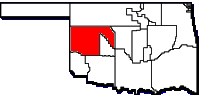
The following 7 ccurrent counties occupy the Cheyenne & Arapaho land:
Page updated:
State Coordinator: Linda K. Lewis
Asst State Coordinator: Rebecca Maloney
Designed by Templates in Time